Front Row lecture series
Accelerating evolution to create new medicines
Christian Diercks, PhD
Assistant Professor
Department of Chemistry
Wednesday, October 14, 2026
4:00 p.m. PT | 7:00 p.m. ET
Biologic drugs account for about a quarter of recent drug approvals, and most are antibodies. Although antibodies have transformed treatment for many conditions, they mainly work by binding to their targets. But some diseases may benefit more from therapeutics that can selectively alter those targets instead. In this free Front Row lecture, Assistant Professor Christian Diercks will discuss how he harnesses accelerated evolution—a laboratory process that speeds up cycles of genetic change and selection—to engineer therapeutic enzymes that actively break down or modify disease-related molecules. At the center of this work is T7-ORACLE, a synthetic biology platform developed by Diercks’ lab. It continuously introduces mutations into selected genes in bacteria to rapidly evolve proteins, including enzymes, at large scale with minimal researcher intervention. The Diercks lab is using T7-ORACLE to evolve enzymes for the selective degradation of the painful crystals behind gout flares, and to target voltage-gated ion channels involved in chronic pain as a non-addictive alternative to opioid-based therapeutics.
Presented: October 14, 2026
Presentation slides
Key Takeaways
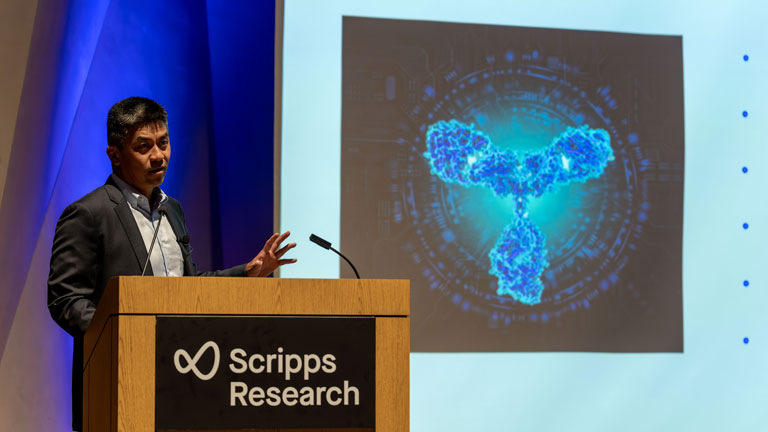





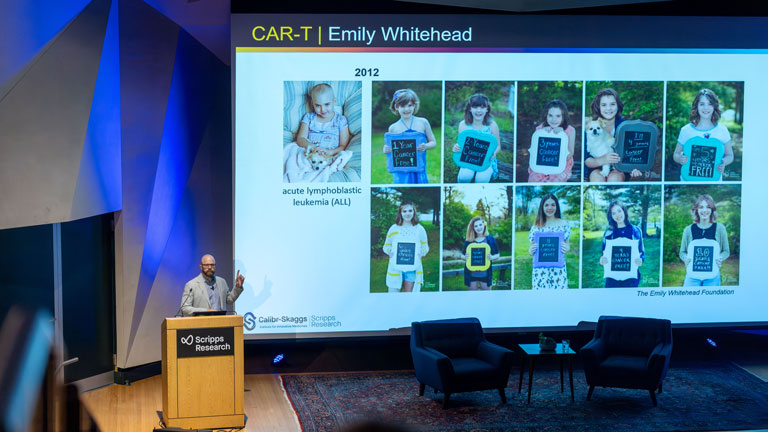

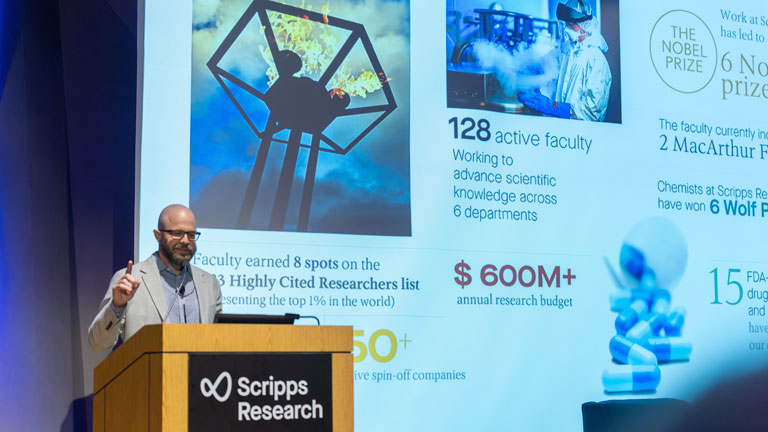

Biologic drugs account for about a quarter of recent drug approvals, and most are antibodies. Although antibodies have transformed treatment for many conditions, they mainly work by binding to their targets. But some diseases may benefit more from therapeutics that can selectively alter those targets instead. In this free Front Row lecture, Assistant Professor Christian Diercks will discuss how he harnesses accelerated evolution—a laboratory process that speeds up cycles of genetic change and selection—to engineer therapeutic enzymes that actively break down or modify disease-related molecules. At the center of this work is T7-ORACLE, a synthetic biology platform developed by Diercks’ lab. It continuously introduces mutations into selected genes in bacteria to rapidly evolve proteins, including enzymes, at large scale with minimal researcher intervention. The Diercks lab is using T7-ORACLE to evolve enzymes for the selective degradation of the painful crystals behind gout flares, and to target voltage-gated ion channels involved in chronic pain as a non-addictive alternative to opioid-based therapeutics.
Speaker Spotlight
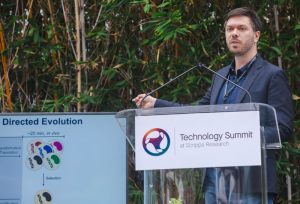
Innovation and entrepreneurship at the inaugural Technology Summit
The inaugural Scripps Research Technology Summit took place in September 2024. Attendees included life science investors, biotech professionals, scientists, and industry leaders, who learned about efforts to encourage entrepreneurship and move technologies toward practical use. The summit also covered collaborations between scientists and industry partners to address healthcare gaps in areas such as neuroscience, oncology, protein engineering, vaccine development, and climate science.
Learn More
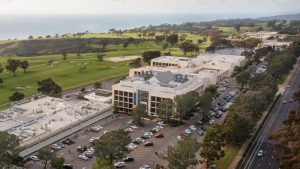
Nine new faculty join Scripps Research
The newly appointed faculty are making transformative discoveries in areas ranging across drug discovery, neuroscience, chemistry, immunity and more.
Learn More